
FROM THE EXCEED IT BLOG
Best Digital Payment Platforms for SaaS
Published
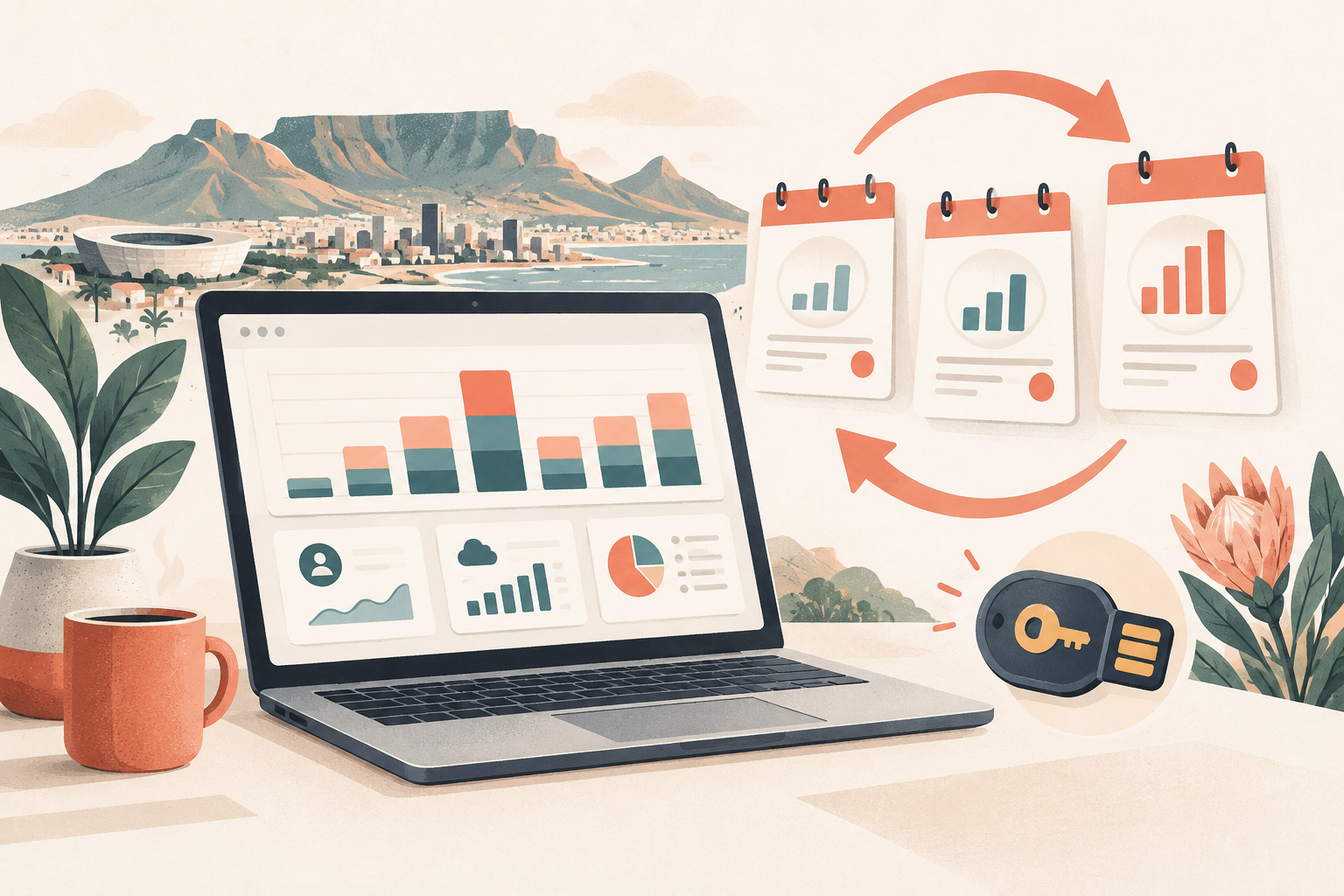
The best digital payment platforms for SaaS support the way your product bills customers every month or year. That might mean R499 every month. It might also mean a bill that changes with the number of users, messages or bookings.
SaaS means software as a service: customers use software, usually online, and pay for continued access. A payment gateway collects money. Your billing system decides what is owed and why. Some providers also schedule repeat collections, but that does not mean they run every part of your billing process.
Quick answer: Compare Paystack and Payfast for fixed subscriptions and developer-controlled repeat charges. Peach is worth considering for tokenised cards and custom billing flows. PayGate offers separate subscription and vault products. Netcash may suit debit-order or broader billing requirements. Ozow has an approved Capitec-only recurring option. Verify Yoco or Payflex's exact recurring product before selecting either as your SaaS billing foundation.
This guide uses provider documentation checked on 24 September 2026. Recommendations are based on documented fit, not a live reliability benchmark or an invented universal winner.
Two billing models that should not be confused
Model one: the provider schedules R499 each month
You create a subscription plan. The customer approves it. The provider attempts to collect R499 on the agreed cycle.
This can suit a simple product with one monthly plan. You still need rules for failed payments, cancellation and account access. Annual plans introduce similar questions: what happens if someone cancels after three months, and does the contract promise any refund?
Model two: your software calculates each bill
The customer agrees to usage-based pricing. Their payment method is tokenised: the provider keeps the sensitive details and your system receives a secure reference.
Your software then calculates:
| Billing month | What the customer owes | Who calculates it? |
|---|---|---|
| January | R399 | Your SaaS billing system |
| February | R610 | Your SaaS billing system |
| March | R470 | Your SaaS billing system |
Your server requests each collection against the saved method under the customer's agreement. An API is the connection through which software makes that request.
This is different from changing a fixed subscription manually every month. You need a clear invoice, a record of usage, a due date and a way to recover a failed payment.
When comparing the best digital payment platforms for SaaS, establish which model you need before comparing percentages. A beautifully simple checkout cannot fix a billing product that cannot collect your invoices.
Billing capability comparison
“Yes” describes a documented function, not approval for every business. “Contact provider” means the reviewed documentation does not establish that particular requirement.
| Provider | Scheduled subscriptions | Saved method / token | Custom variable collection | Notifications and failed payments | Refunds / international scope |
|---|---|---|---|---|---|
| Paystack | Yes: plans and intervals | Yes: reusable authorisations | Yes: charge authorisation with an amount | Webhooks; failed subscription charges are not automatically retried | Refund API; international cards subject to activation |
| Peach | Depends on integration; recurring API documented | Yes: card and supported wallet tokens | Yes: appropriate card-on-file/MIT flow | Webhooks; confirm scheduler and retry ownership | Refund API; method limits and international pricing apply |
| Payfast | Yes: scheduled card subscriptions | Yes: tokenisation agreements | Yes: merchant-requested tokenisation charges | ITN notifications; confirm current retry policy | Refund API; confirm international recurring-card eligibility |
| PayGate | Yes: PaySubs | Yes: PayVault | Depends on approved PayHost/PayVault configuration | Product-specific responses and status queries | Depends on acquiring bank and product |
| Netcash | Yes: advertised subscriptions; debit-order service also available | Depends on collection product | Depends on mandate and collection service | Product-specific batch results and reconciliation | Confirm refunds and international recurring eligibility |
| Ozow | Limited: approved Capitec agreements | Bank consent agreement, not a reusable card token | Limited: agreement limits and frequency apply | Subscription/collection notifications; merchant triggers collections | Bank-specific; not an international card subscription solution |
| Yoco | Contact provider | Contact provider for online card reuse | Contact provider | Checkout webhooks exist; not proof of billing retries | Online refund API; international checkout cards |
| Payflex | Contact provider for SaaS subscription product | Purchase instalment agreement is different | Contact provider | Order callbacks are not a SaaS billing scheduler | Order refunds; South African offering |
The following provider sections explain the evidence behind this table. A marketing page saying “recurring” is not enough to prove support for unattended variable card charges.
Provider-by-provider billing review
Paystack: managed plans and reusable authorisations

Paystack documents both subscriptions and recurring charges. For custom charges, check that the authorisation is reusable and preserve the email associated with it. Your server supplies the new amount.
There is an important operational limit: the subscription documentation says failed charges are not retried automatically. It provides invoice and payment events so your software can respond. Build a customer recovery process instead of promising automatic retries that are not there.
Paystack's Google Pay support guidance also describes subsequent merchant-initiated charges from an authorised Google Pay payment. Confirm the chosen channel and account setup before relying on it.
Peach Payments: control the amount and the charging rules
Peach's card-on-file guide distinguishes the initial customer-present transaction from later merchant-initiated transactions, or MITs. An MIT is a charge the business starts under an existing customer agreement.
Its API parameters distinguish fixed subscriptions, variable standing orders and unscheduled use cases. That is stronger evidence for custom billing than a generic “supports subscriptions” badge.
Your developer must still choose the correct flags, retain consent and use the approved account setup. Ask who owns the schedule, invoices, retries and notices. A token and charge API do not automatically supply those services. See Peach recurring setup.
Payfast: fixed subscriptions or charges your software requests

Payfast's developer documentation explicitly separates subscriptions from tokenisation. It describes tokenisation as suitable where future dates and amounts may be unknown, with the business instructing each charge through the API. Its recurring flow is card-based; do not extend that claim to every checkout method.
Subscriptions can be maintained through the dashboard or API. Confirm cancellation behaviour and the current retry schedule for your account, then decide what your SaaS must do itself. The docs' ITN, or instant transaction notification, is the message your system uses to learn about a payment outcome.
PayGate: separate products for scheduling and card storage

PaySubs is PayGate's hosted recurring card interface. PayVault supplies card tokens for later transactions. Those are distinct jobs.
Ask PayGate and the acquiring bank to confirm the merchant-initiated charging flow, international-card support and costs. Token storage alone does not establish every permission or billing feature your SaaS needs. Its PayHost documentation uses SOAP/XML, a different API format from the REST/JSON interfaces many modern applications use; allow for that in integration estimates.
Netcash: consider debit orders as a separate billing route

Netcash offers subscriptions and debit-order collections. A debit order collects from a bank account with an agreed mandate: the customer's authority setting out what can be collected. It is not a tokenised card charge.
This may suit a South African business product already using scheduled collections. Plan for batch processing, unpaid collections and reconciliation. Ask how a changing invoice fits the selected mandate and product. Its billing page does not replace a product-specific integration and fee agreement.
Ozow: variable bank collections with a narrow eligibility boundary

Ozow's current Capitec Pay recurring documentation limits availability to approved merchants and use cases. The customer must use Capitec and approve the agreement. Other-bank customers need another payment route.
Its One API recurring guide describes creating consent and triggering collections within agreed constraints. This is useful evidence for variable bank billing, but not for recurring card billing: the documentation says card support is not yet available in this flow.
Yoco: validate recurring requirements before committing

Yoco's online Checkout API documents individual payments and notifications. We did not establish a public, general-purpose SaaS recurring-card API from the reviewed developer index.
A “webhook subscription” in developer documentation means subscribing to event messages. It does not mean subscribing a customer to a paid software plan. Obtain the exact recurring product documentation if Yoco is on your shortlist.
Payflex: purchase instalments are not ongoing SaaS billing

Payflex's order integration concerns purchases, approval and refunds. Paying a purchase off over instalments is different from charging for another month of software use.
Do not infer usage-based SaaS support from the fact that instalments repeat. Ask for a specific supported SaaS arrangement before making it your primary billing system. For its more usual role, see our ecommerce payment guide.
Compare fees for repeat billing
Pricing last checked: 24 September 2026. Request a quote that explicitly covers recurring charges, international customers, failed attempts, token storage and refunds. High-volume rates may differ.
| Provider | Published fee useful for budgeting | Recurring caveat | Monthly fee | Settlement / transfers |
|---|---|---|---|---|
| Paystack SA | Local card 2.9% + R1; international 3.1% + R1 | Confirm charge eligibility; no separate subscription surcharge listed | None | Standard settlement free; bank transfers R3 |
| Peach Growth | Recurring local card 3.5% + R1.50 | Ordinary 2.95% checkout rate is not the listed recurring rate | Tokenisation R200; no base account fee | Standard settlement free; Payouts quote |
| Payfast aggregation | Card 3.2% + R2 | Confirm any contract-specific recurring costs | None | Standard payout R8.70 |
| PayGate | Contact provider | Quote PaySubs/PayVault and banking costs separately | Contact provider | Contact provider |
| Netcash | Contact provider | Debit-order and card tariffs differ | Contact provider | Contact provider |
| Ozow | Capitec Pay VRP 1.5%, minimum R1 | Approved Capitec use cases only; VAT label unclear | Contact provider | Settlement quote; outward payouts R3 |
| Yoco Core | Local online card 2.95% + R2 | One-off checkout reference, not a verified recurring quote | Core R0 | Standard settlement free |
| Payflex direct | Contact provider | No verified SaaS recurring tariff | Contact provider | Contact provider |
Clearly labelled Peach, Paystack card, Payfast and Yoco prices exclude VAT. Confirm Ozow's VAT treatment and that of Paystack's separately listed transfer charge. Yoco's marketing and detailed plan prices differ; the row uses its detailed lower-volume Core table. Netcash package prices should not be carried across to unrelated products.
A R499 subscription: compare the actual fee basis
These are calculated local-card collection costs before VAT, using the published schedules above. They exclude monthly fees and recovery work.
| Collection | Paystack | Peach recurring | Payfast card |
|---|---|---|---|
| R100 | R3.90 | R5.00 | R5.20 |
| R499 | R15.47 | R18.97 | R17.97 |
| R1,000 | R30.00 | R36.50 | R34.00 |
| R10,000 | R291.00 | R351.50 | R322.00 |
For Peach, a R200 monthly tokenisation fee spread over 20 successful monthly collections adds R10 per collection before VAT. Spread over 200, it adds R1. This is an allocation example, not a new provider fee.
The best digital payment platforms for SaaS should be compared on a realistic billing month, including failed invoices and support effort. A difference of a few rand on a successful collection may matter less than a poorly handled cancellation.
What your billing system still needs to do
Record usage in a way customers can understand
For February's R610 bill, show the base subscription and the extra usage. Give each invoice a unique number and preserve the pricing version used. Otherwise a plan-price change can accidentally rewrite the explanation for an old bill.
Decide the cut-off time, time zone and treatment of late usage before launch. If an invoice is disputed, the team should be able to reproduce it without guessing.
Explain upgrades and downgrades
Suppose a customer moves from R300 to R600 halfway through a simple 30-day billing period. If your policy charges only for the remaining 15 days, the extra amount is R150: the R300 difference multiplied by 15/30.
This is proration, or charging for part of a period. It is an example policy, not a promise that a provider calculates it for you. You might instead apply the upgrade at the next renewal. Tell customers which rule you use, including how credits work when they downgrade.
Treat failed payments as a normal workflow
A failed payment can mean insufficient funds, an expired card, a cancelled agreement or required customer authentication. Do not retry every error forever.
Dunning means the process of recovering an unpaid bill: notify the customer, offer a way to update payment details and retry only when permitted. Decide on grace periods and when access changes. Keep invoice status separate from access status so a brief provider outage does not instantly lock everyone out.
If a request times out, first check whether it succeeded. Blindly submitting another charge can create a duplicate. Use a stable invoice/payment reference and the provider's documented duplicate-prevention controls.
Handle webhooks and reconciliation
A webhook tells your server about an event. Verify its authenticity and store the result. A repeated notification must not issue a second receipt or grant extra credit.
Reconciliation matches your invoices against provider transactions and bank settlements. Run a regular check for invoices marked unpaid even though money was collected, and for payment records with no matching invoice. See Paystack webhooks and Peach webhook guidance.
Make cancellation stop the next collection
Cancelling inside your SaaS must also stop the active provider subscription or your own scheduled charge. Decide whether access ends immediately or at the end of the paid period. Refunds, cancellation and deleting a saved card are separate operations.
For usage billed after the month ends, explain any final invoice at cancellation. Do not treat an old token as unlimited permission to keep billing.
Before you choose: run a billing rehearsal
Test a monthly renewal, an annual renewal, an upgrade, a cancelled account, a failed charge, an updated card and a partial refund. Ask how the provider reports outages, changes API versions and supports reconciliation. Documentation quality helps; it does not prove uptime or response speed.
If customers use a mobile app, our mobile payment guide explains checkout and app-store billing constraints. If vendors also earn money through the product, see multi-vendor payment platforms: paying vendors is separate from charging them a software subscription.
Frequently asked questions
Which are the best digital payment platforms for SaaS with variable bills?
Peach, Paystack and Payfast document relevant tokenised or reusable-card charge flows. Ozow documents an approved Capitec recurring route. Pick only after confirming customer consent, the charge type, account approval and who runs the billing schedule.
Is a saved card enough for automatic billing?
No. The payment method must be reusable for the intended charge, the customer must agree, and the integration must follow the provider's instructions. A token is a secure reference, not a billing policy.
Do providers automatically retry failed subscriptions?
Do not assume so. Paystack explicitly says it does not retry failed subscription charges. For other products, obtain the documented policy and build only the recovery work that remains your responsibility.
Can I charge international customers in dollars?
International-card acceptance and dollar billing are different features. Confirm the collection currency, your settlement currency, conversion costs and recurring-card eligibility. Do not infer them from an “international payments” badge.
Choose the billing model before the payment button
The best digital payment platforms for SaaS fit both today's subscription and the awkward cases: changing usage, failed collections, upgrades, credits and cancellation. Start with a sample invoice and a complete renewal cycle, then select the payment product.
Exceed IT builds SaaS and custom billing integrations. Talk to us about your SaaS product to plan the billing rules and payment responsibilities before development.
Sources and review notes
The provider sections link the recurring and tokenisation evidence directly. Further references: Paystack transaction API, PayGate product documentation, Ozow recurring integration and Netcash inbound payment products. Blank capabilities have not been filled by assumption. Logos identify the providers and do not imply endorsement.